Why more and more people are wrapping aluminium foil around door handles – and the surprising reason behind it
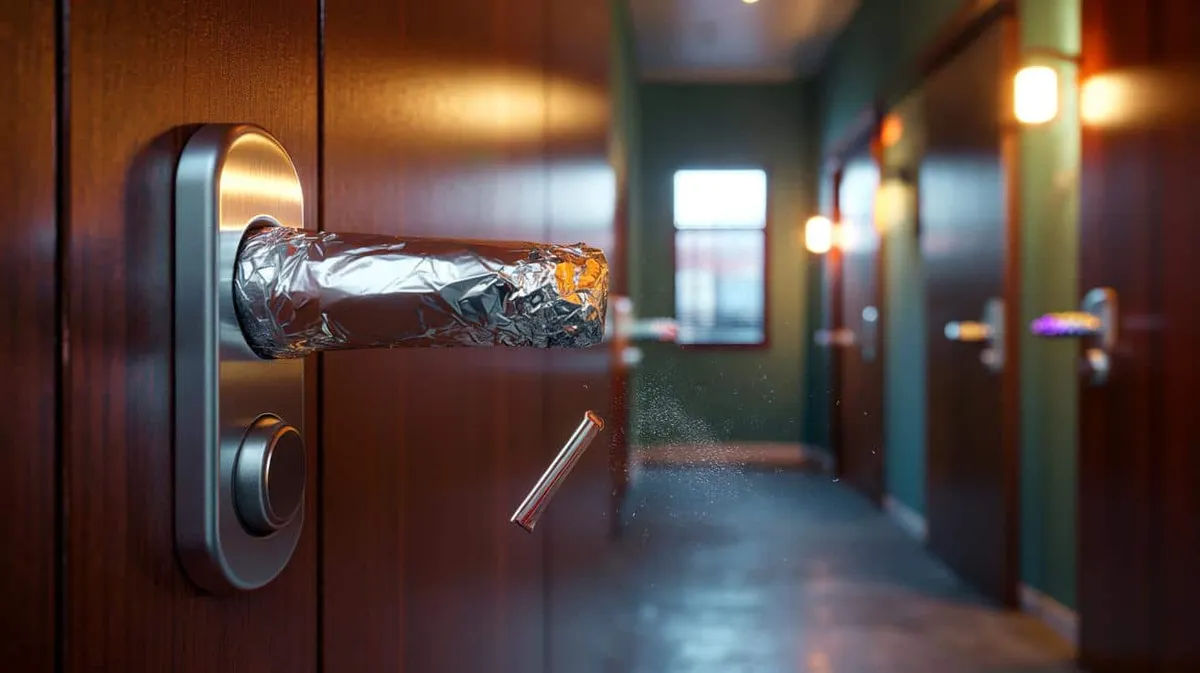
As home security becomes more digital, a familiar kitchen item has been repurposed: aluminium foil. Wrapping foil around a door handle is a simple, audible deterrent that can provide extra reassurance and act as a basic alert. The idea is used in some neighbourhoods as a low-cost way to increase awareness.
How the foil trick works
On the third floor of an old building in Cologne, the soft rustle and faint crackle, like folded paper, is a sign of reassurance for residents. The method is straightforward: wrap about 10 cm of slightly crinkled aluminium foil around a door handle and it becomes a noise alarm. The sound can signal someone inside is present and may deter anyone attempting to manipulate the lock.
There is a psychological element as well. The shiny, crinkly foil is a tactile and visual cue that might make someone think twice before turning the handle. Because it is common in most kitchens, it is quick to fit without special tools or technology.
However, this does not replace a solid door and a good lock. Treat it as an additional prompt to stay alert rather than a complete security solution.
How to set it up and what can go wrong
Getting this in place takes a few simple steps. Gently press the foil into ridges, then loosely place it around the handle. For round knobs it works like a small cap; for flat levers add a flap or an “ear” so minimal movement produces a crinkle. It is fast to install, taking only seconds, and fits most handle shapes.
Fit matters. If you wrap it too tightly the sound will be muffled; if it is too loose it can fall off. If using it as a temporary hygiene measure (for example during painting), replace the foil regularly. Keep the edges neat to avoid scratches or cuts, especially where children live.
Where people are using it and what they’ve noticed
From apartment entryways in Cologne to storage rooms across Berlin, people have used aluminium foil as a noise cue. Lena, a 29-year-old resident of an old building in Cologne, began using it after a series of cellar break-ins. Her first result was merely catching a flatmate off guard, but the reassurance it brought mattered. As Lena put it, “Hearing something before the door opens reduces pressure and anxiety.”
These low-tech measures have prompted conversations in neighbourhood forums. People report being more alert, checking peepholes more often and talking to neighbours about building safety, so the foil has become both a practical measure and a communal talking point.
When it’s useful, and when it isn’t
Aluminium foil is a useful short-term fix, but it is not a replacement for sturdier measures. A mix of motion-sensor lighting, secure locks, peepholes and neighbourly watchfulness provides better protection. As a Berlin locksmith warned, “Foil is not a magic trick. It makes noises and signals attention, nothing more.”
Also remember to follow the terms of rental agreements and ensure any additions do not breach fire-safety rules in shared areas. Real-world security usually needs both vigilance and some technology; the foil is a low-key place to start.
This improvisation has prompted conversations and raised awareness in communities. It is an inexpensive, temporary measure that some people find reassuring, not a substitute for proper security.