Mould on potting soil: How to get rid of white patches and fungus gnats
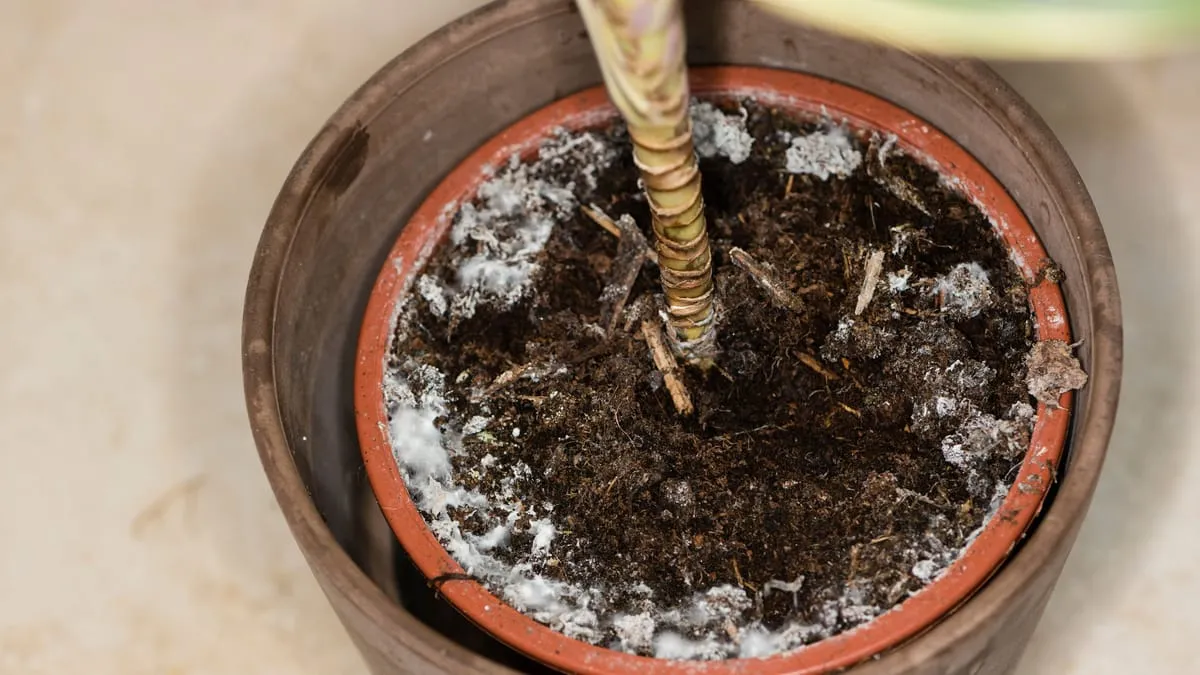
Mould on potting soil and the sudden appearance of tiny flies in plant pots are more than an aesthetic problem; they can affect plant health and, in some cases, human health. White patches and small flying pests, fungus gnats (Trauermücken), can be controlled with appropriate measures to protect you and your houseplants.
Recognising the signs
Spotting an issue usually starts with a white layer on the soil surface. You might also see small black flies crawling on the soil or rising in small clouds when you water. The white material often looks fluffy at first and can then spread through the soil. The larvae of these flies are not easy to see unless you dig into the compost, but their presence is a clear sign of infestation.
Mould growth in potting soil can be as hazardous as mould on walls. It is important to deal with it quickly because fungus gnat larvae feed on plant roots and can weaken the plant over time.
Mould or lime: how to tell the difference
What looks like mould can sometimes be lime or calcium deposits, especially where water is hard. Gently scrape the white layer with a spoon or wooden stick. If it is hard, crumbly and flakes off, it is likely lime. If it is soft and crumbles, it is probably mould.
How to deal with mould infestations
When you find mould on potting soil, act promptly. Take the plant outdoors and carefully remove it from the pot. Clean the soil away from the root ball and scrub the pot (a vinegar solution works well to remove deposits). Replant using fresh, good-quality potting soil and a clean pot.
If the roots look healthy, water sparingly. If the roots are wet or damaged, refrain from watering for a few days to let them recover from excess moisture. Discard the old, mouldy soil entirely; mould often penetrates deep into the compost. Over the following days, check your other houseplants for any signs of spread and replace their soil and clean pots if needed.
Getting on top of fungus gnats
Fungus gnats thrive in moist potting soil because it is suitable for their eggs and larvae. For light infestations, place yellow sticky traps near the soil; these catch adult gnats and reduce further egg-laying. A layer of quartz sand on the soil surface can also block the small black insects from reaching the soil to lay eggs. For severe infestations, you may need to replace the soil completely.
Why cheap potting soil moulds faster
Lower-cost potting mixes are often made from materials such as compost, black peat (Schwarztorf) or poor-quality wood fibres that break down quickly and hold moisture; conditions that favour mould. These mixes can compact when wet, reducing oxygen and encouraging fungal growth. Better-quality soils include drainage materials that improve aeration and prevent waterlogging. Some cheaper producers also skip important hygienisation steps, so mould spores and fungus gnat eggs can survive and multiply.
Extra tips and home remedies
A simple home remedy is to sprinkle cinnamon on the potting soil. Cinnamon may inhibit mould and fungus gnats. Natural solutions like this can help as part of routine plant care.
Act quickly when you spot mould or fungus gnats. Removing the affected soil completely (not just the surface) is important because the fungus often grows deep before it becomes visible. Monitor your other plants so you can tackle any problems early and help maintain a healthy indoor garden.
Using suitable methods and prevention helps reduce potting soil moulds and fungus gnats and maintain healthier conditions for you and your plants.