Forget the toaster and kettle: the household device most at risk in a storm that experts insist you must always unplug
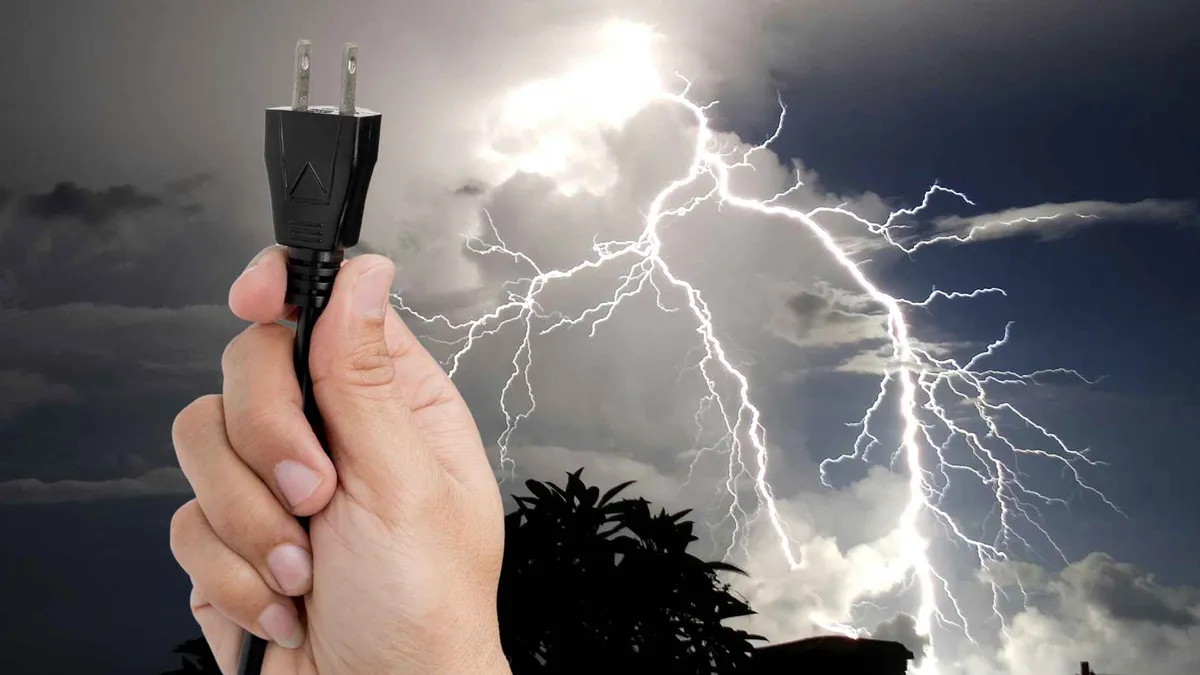
When thunder rolls and the sky goes dark, many people think to unplug the kettle or toaster. But the item most at risk in a thunderstorm isn’t in the kitchen; it’s sitting in front of the sofa, on the TV stand. Technicians say that your television, especially modern flat-screen sets, is the device that needs immediate attention. If lightning strikes or the power grid falters, TVs can be hit by dangerous surges unless you physically unplug them.
Why modern TVs are so vulnerable
Unlike old bulky tube sets, today’s LED, QLED and OLED TVs are more like slim computers than traditional televisions. They contain delicate parts, tiny chips, power circuits and capacitors, that require steady voltage. Lightning strikes and power grid glitches can introduce thousands of extra volts into household wiring, putting those sensitive electronics at serious risk.
Repair guides show that the parts that most often fail are the power supply boards and capacitors. Even very short surges can cause permanent damage, leaving a screen dead in an instant. Repeated tiny outages and the quick on–off cycles during storms also cause wear over time, reducing a TV’s lifespan.
How surges get in and do more damage
Surges don’t only enter through the mains socket. Antenna leads, cable TV lines and HDMI cables can carry dangerous spikes straight into your TV. Connected devices such as set-top boxes and game consoles can also pass a surge along. A spike hitting one device in a chain can damage everything linked to it, which is why technicians recommend unplugging all associated cords during intense storms.
How to protect your kit during a storm
Turning your TV off with the remote doesn’t disconnect the mains — the internal electronics are still connected to the supply. The reliable action is to physically unplug the TV from the wall or power strip. Do this as soon as you hear thunder or see a storm approaching, not wait until the lights start to flicker.
Also unplug antenna cables, cable TV connections and HDMI leads. Ordinary voltage stabilisers, surge strips and small UPS units are common in homes, but these often cannot withstand the energy unleashed by a direct lightning strike. The National Institute of Industrial Technology (INTI) emphasises that while these devices can cope with minor voltage fluctuations, they may fail during major electrical storms. For stronger protection, consider higher-grade UPS systems and surge protectors that meet national standards, especially if you live somewhere with frequent outages.
Why it’s worth unplugging — money and practicalities
From a financial point of view, disconnecting your TV is invariably cheaper than facing the cost of replacement. Spending a minute to unplug a cluster of devices in your entertainment area or home office can prevent losing several pieces of kit. It’s not just TVs: modems, Wi‑Fi routers, streaming boxes, game consoles and audio receivers are all vulnerable during storms. By contrast, simple appliances like kettles or toasters are built with tougher, more basic components and cope better with voltage swings.
Protecting your electronics during a storm preserves your investment and keeps your home entertainment and connectivity running. With key equipment often gathered in the entertainment corner or home office, unplugging those clusters can save the heart of your digital setup from unexpected damage.
Technicians, electricians and electronics specialists recommend physically unplugging your TV and related devices during an active thunderstorm. The National Institute of Industrial Technology advises the same: unplugging remains the most reliable protection to reduce the risk of damage.