Farewell to level‑access showers: modern homeowners are all opting for this new alternative
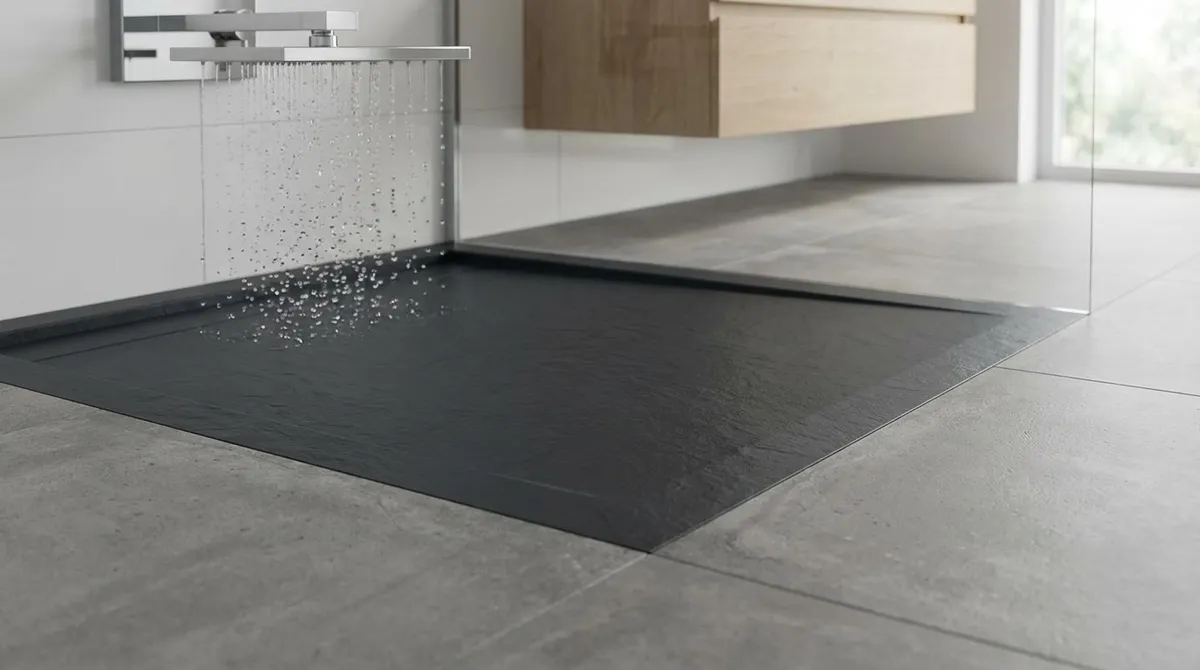
Bathroom design in Germany is changing rapidly. The fully tiled, floor-level shower is being replaced by practical, high-tech ultraflat shower trays. By 2026, these solutions are expected to be widely adopted, driven by practical issues with traditional setups rather than style alone.
Why tiled flush showers are falling out of favour
For years, fully tiled walk-in showers were associated with openness, luxury and barrier-free access and were popular with homeowners and bathroom planners in Germany. Behind the minimalist look, however, there are technical and maintenance issues.
Tiled showers require high-quality workmanship: even small problems, such as hairline cracks in grout or poor sealing, can cause serious water damage. As architect Anna Schmidt from Berlin says, “I thought my bathroom had come out of a magazine, but the constant worry about moisture and the tedious grout cleaning became a nightmare.” The many grout joints also encourage mould and bacteria, making maintenance more time-consuming.
Why ultraflat shower trays are catching on
Ultraflat shower trays (often called “shower boards”) are a clear alternative. Made in one continuous piece, they remove grout joints in wet areas and reduce the risk of leaks. They are available in mineral cast, steel enamel, and sanitary acrylic, offering different combinations of durability and appearance. Mineral cast provides a warm, solid, scratch-resistant finish; steel enamel is notable for toughness; and sanitary acrylic is more budget-friendly and easy to care for.
There are a range of colours and styles, classic white, concrete grey, deep black, and textures that mimic slate or stone, so they suit various interiors. The grout-free surface also makes cleaning easier, typically requiring only a quick wipe rather than scrubbing into joints, which helps maintain hygiene and reduce upkeep.
Accessibility, safety and money matters
When installed flush with the surrounding floor, ultraflat trays meet DIN 18040 (the German standard for barrier-free construction) and are suitable for future accessibility needs. With edge heights of no more than 2 cm, they can accommodate wheelchair access. Many models also have anti-slip surfaces, improving safety for people of all ages.
The financial side matters as well. Initial costs typically range from £2,175, £6,090 (depending on shower size, material and local labour rates), but long-term maintenance costs tend to be lower. Compared with the higher failure risk and labour-intensive repairs often associated with fully tiled showers, ultraflat trays can be more economical over time. Funding options, for example KfW Bank’s 455-B Programme (funding for barrier-free upgrades), can make these improvements more affordable.
What it means for the bathroom
The move to ultraflat shower trays aligns with a focus on sustainability and low-maintenance living. As bathrooms increasingly function as personal retreats rather than purely functional rooms, design must balance elegance with practicality.
Wider adoption of ultraflat trays affects bathroom aesthetics while offering a practical combination of safety, accessibility and cost-effectiveness. For homeowners in Germany and beyond, this change points to a more sensible and sustainable approach to bathroom design.